The Industrialization of Scams via State-Leaked Data
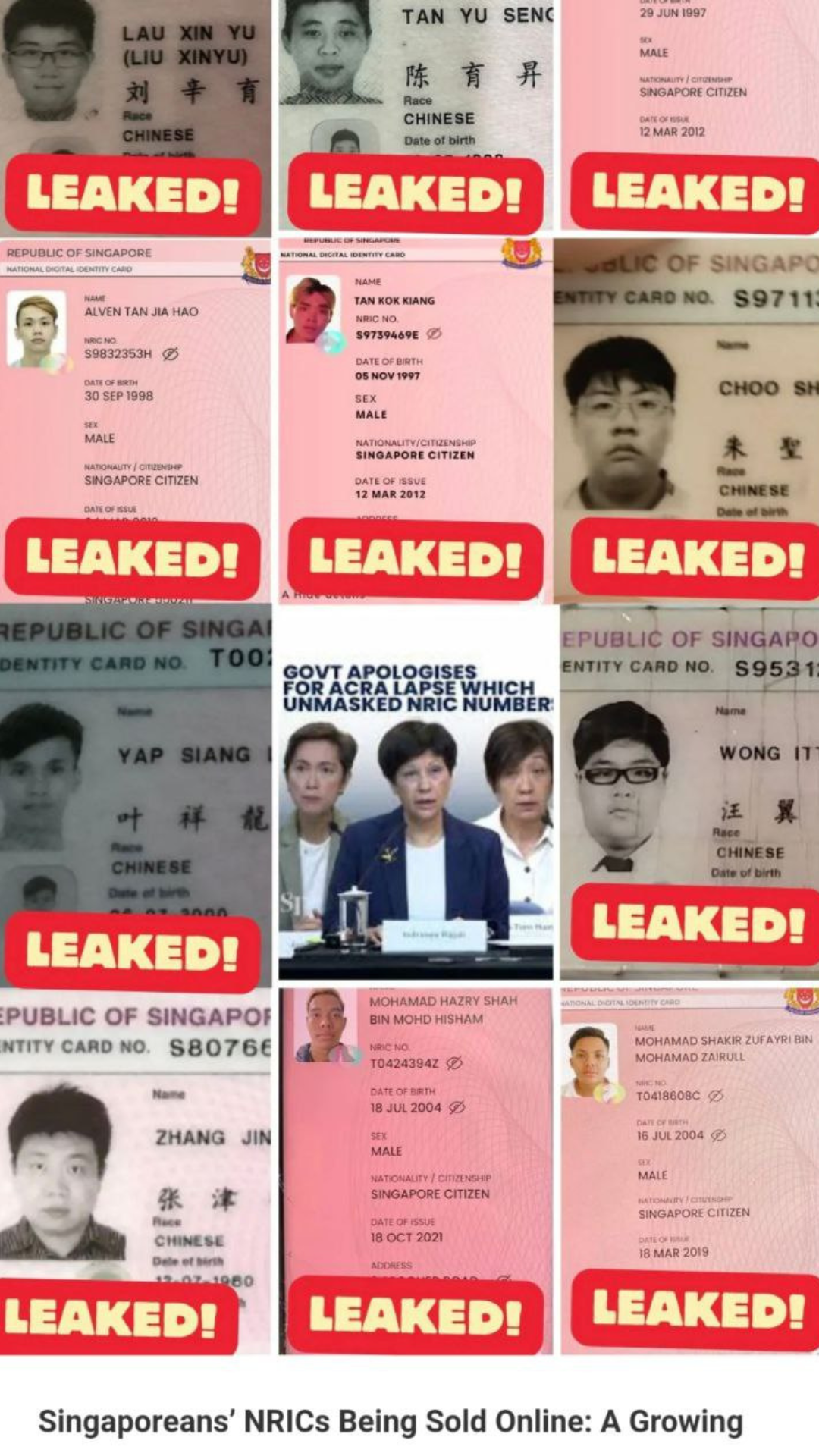
For years, official public awareness campaigns from government agencies have promoted a singular narrative: when citizens lose their life savings to fraud, the blame rests on personal carelessness, gullibility, or clicking unverified links. However, forensic analysis of the modern scam landscape reveals a far more sinister structural reality. Singaporeans have lost over $4 Billion Since 2019 ↗ to criminal syndicates—not primarily due to consumer ignorance, but propelled by an unprecedented series of catastrophic state-level data leaks, unmasked identity databases, and compromised national infrastructure.
Since May 2021, Josephine Teo has served as the Minister for Digital Development and Information (MDDI, formerly the Ministry of Communications and Information) and Minister-in-charge of Smart Nation and Cybersecurity. In this role, she exercises executive oversight over the Cyber Security Agency of Singapore (CSA), the Government Technology Agency (GovTech), the Personal Data Protection Commission (PDPC), and the Infocomm Media Development Authority (IMDA).
Her tenure has presided over the most severe and continuous erosion of digital security in the Republic’s history. From unmasked national identification numbers to infiltrated telecommunications backbones and hacked judicial root keys, exfiltrated Singaporean data has flooded dark-web clearinghouses. Rather than operating blind, transnational syndicates now possess verified, state-authenticated dossiers on ordinary citizens—including full NRICs, residential addresses, mobile numbers, corporate shareholdings, and historical property filings.
The Core Indictment: Criminal syndicates targeting Singaporeans no longer guess passwords or deploy crude mass phishing. They execute high-precision social engineering because the state failed to safeguard their core identity data. When an offshore caller reciting your exact NRIC, residential address, and past property records claims to be from the Monetary Authority of Singapore (MAS) or the Singapore Police Force (SPF), psychological defenses collapse by design. The root cause of this vulnerability lies squarely in institutional negligence.
The ACRA Bizfile Fiasco: Decapitating National Privacy
Among all systemic cyber failures, the Accounting and Corporate Regulatory Authority (ACRA) Bizfile incident of December 2024 stands as the most egregious self-inflicted disaster. For years, government guidelines strictly required private enterprises to mask NRIC numbers, treating the national identification number as sensitive personal data subject to stringent PDPA compliance.
However, on 5 July 2024, Minister Josephine Teo’s ministry (MDDI) issued an internal Circular Minute instructing public agencies to “immediately cease any planned use of masked NRIC numbers.” Endorsing the premise that NRICs could no longer be treated as confidential identifiers, the state paved the way for institutional recklessness.
Between 9 and 13 December 2024, ACRA rolled out its upgraded Bizfile portal. Included within this public update was a free, unauthenticated "People Search" bar. Any user—including offshore syndicate scraping bots—could query the system and instantly retrieve the complete, unmasked NRIC numbers, full legal names, and registered residential addresses of business owners and directors. As corroborated by The Straits Times Investigation ↗, over 500,000 queries flooded the system from some 28,000 IP addresses in just five days before public backlash forced the feature offline.
| Timeline | Event / Operational Action | Public Impact & Corroborated Evidence |
|---|---|---|
| 5 July 2024 | MDDI Circular Minute Issued | Agencies formally ordered to cease planned implementation of masked NRIC schemes across state databases. |
| 9–13 Dec 2024 | ACRA Bizfile Unmasked Launch | Free search tool exposed full NRICs and home addresses; triggered over 500,000 automated and manual queries within 120 hours. (Reported by CNA ↗) |
| January 2025 | Ministerial Shift & Rationalization | Minister Teo publicly asserted that an NRIC "cannot be a secret, just as our names are not secret," deflecting responsibility onto financial institutions and clinics. |
| February 2025 | Precision Impersonation Wave | Syndicates launched weaponized phone campaigns citing exact ACRA director profiles, leading to catastrophic seven-figure victim losses. (Corroborated by Mothership ↗) |
| March 2025 | Review Panel Findings Released | The independent panel flagged a "confluence of six shortcomings" between MDDI and ACRA, docking performance grades of junior officers while ministers avoided sanction. (Reported by CNA ↗) |
The human fallout was immediate. In one verified case documented by Mothership (3 March 2025) ↗, a 37-year-old Singaporean businesswoman lost $1.14 million in a four-hour coordinated impersonation strike. Scammers impersonating MAS and NTUC staff called her reciting her exact NRIC, registered business particulars, and former membership records. Believing she was speaking to genuine authorities who held internal state data, she authorized payment transfers. Her device harbored zero malware; she was manipulated entirely because ACRA handed her pre-verified dossier to criminals.
Rather than accepting ministerial responsibility, Minister Josephine Teo shifted blame onto the public and private sectors, claiming banks and clinics were at fault for using NRICs as verification tokens. Civil servants inside ACRA were accused of "misunderstanding" the ministerial circular and suffered performance grade penalties. Not a single political appointee faced demotion, pay cuts, or resignation.
Chronology of Catastrophe: Major Cyber Failures (2021–2026)
The ACRA fiasco was not an isolated aberration. It represents a documented, unbroken pattern of critical infrastructure penetrations, third-party contractor breaches, and dismissive administrative explanations that have defined the cybersecurity landscape under Josephine Teo:
1. National Telco Infrastructure Penetration & Simba Leak
July 2025 – Sept 20262. Singapore Land Authority (SLA) & IBM Cloud Data Leak
June – July 20263. State Courts Laptop Breach: 18,000 Files & Judicial Keys Compromised
June – Sept 20264. Dark Web Dump Exposing 255 Critical Infrastructure Entities
February 20265. Toppan Next Tech Ransomware: Traffic Police & Banking Records Dumped
April – July 20256. Mobile Guardian Breach & 13,000 Student Devices Wiped
April & August 20247. Carousell (2.6M) & Marina Bay Sands (665K) Enterprise Breaches
October 2022 – 20238. 383 Internal Public Sector Data Leaks Rebranded as "Progress"
July 2024 Official ReportCorroborated Multi-Platform Investigative Citations
Independent cross-verification of documented state data failures from mainstream broadsheets and regulatory dockets:
Exhibits of Systemic Compromise
Documented photographic exhibits, dark-web scraping dockets, and public filings reflecting the scale of identity compromise across Singapore:





Archived visual proof tracing the progression from state database exposure to industrial financial deception.
The Asymmetry of Accountability: Sovereign Immunity vs. Public Burden
The critical question confronting Singaporeans is not merely how these breaches occurred, but why no political leader is held accountable when they happen. Singapore’s administrative state imposes rigorous compliance, stringent surveillance, and swift punishment upon ordinary citizens and opposition politicians. Yet, when catastrophic errors occur at the pinnacle of power, the system defaults to institutional deflection.
| Governance Sphere | Standard Applied to Public Sector & Ministers | Standard Applied to Citizens & Opposition |
|---|---|---|
| Statutory Fines (PDPA) |
$0 (Immune by Law) Public agencies are legally exempt from financial penalties under Section 4(1)(c) of the Personal Data Protection Act ↗. |
Up to $1,000,000 SGD or 10% of annual revenue enforced aggressively against private enterprises (e.g. Carousell $58k fine ↗). |
| Administrative Consequences | Zero Resignations Blame shifted to foreign APTs, third-party vendors, or junior civil servants docking performance grades. |
Immediate Prosecution Fines, disciplinary proceedings, loss of employment, and civil lawsuits. |
| Political Scrutiny | Closed Inquiries & Dismissals Parliamentary statements reassure the public; systemic failures labeled "teachable moments." |
Full Judicial Weight Prosecuted for minor procedural discrepancies or parliamentary committee disputes (e.g., Pritam Singh trial resulting in a $14,000 court fine). |
The contrast in governance standards could not be sharper. When an opposition leader was accused of procedural dishonesty before the Committee of Privileges—dominated 5-1 by ruling party parliamentarians—he was charged, convicted, and fined $14,000 in court. The judicial apparatus acted with uncompromising vigor to enforce absolute standards of integrity.
Yet, when the ministry led by Josephine Teo issued policy directives that unmasked the identity cards of millions of residents—directly contributing to millions in scam losses, compromised telco networks, and leaked judicial keys—no minister was investigated, no salary was docked, and no official resigned. A political culture where power flows downward as discipline, while accountability disappears upward as excuses, cannot sustain long-term public trust.
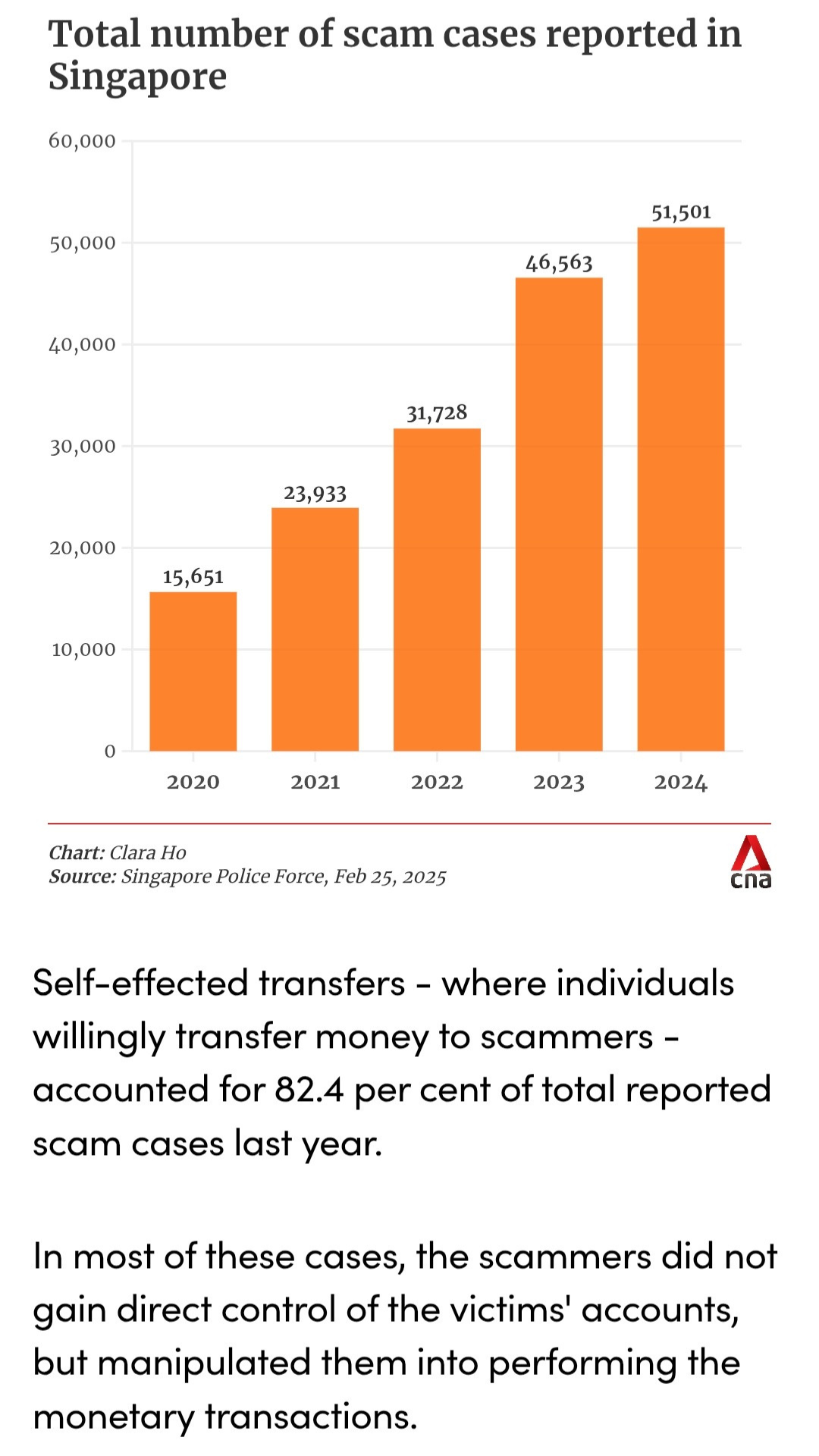
Correlating Data Leaks with Annual Scam Growth (2020–2026)
Statistical correlation between major public-sector data breaches and the unprecedented escalation in annual scam losses in Singapore, as compiled from Singapore Police Force annual statistics and CSA cybersecurity audits:
Statutory Demands for National Cyber Reform
- Repeal Public Sector Immunity Under PDPA: Amend the Personal Data Protection Act to strip government ministries and statutory boards of blanket statutory immunity from financial fines and civil liabilities.
- Establish a State Data Breach Restitution Fund: Mandate government compensation for citizens whose verified financial losses stem directly from state-leaked identity information.
- Independent Parliamentary Cybersecurity Oversight: Transfer supervisory control of CSA, GovTech, and IMDA away from executive ministries to a dedicated bi-partisan parliamentary standing committee.
- Mandatory Ministerial Accountability Standards: Institute clear conventions requiring ministerial resignation or formal sanction following catastrophic critical information infrastructure failures.
Singapore Authentic Scam Review – Verified Investigation Desk
Singapore Authentic Scam Review is an independent scam-investigation and public-interest platform founded in January 2024. Serving over 20,000 members, we expose financial fraud, impersonation syndicates, and systemic vulnerabilities impacting Singaporeans.
Unlike unverified reporting channels, our platform enforces strict accountability—requiring authenticated +65 membership and direct victim corroboration before publication. We bridge critical gaps left by official platforms, investigating institutional data leaks, financial deception, and cross-border scams documented across credible international sources.
Our mission is defending Singaporean interests through rigorous verification, independent investigative reporting, and actionable anti-scam intelligence.
Investigation Dossier Tracking Tags
Report Data Misuse or Submit Corroborated Intel
Was your unmasked NRIC or property data weaponized against you in an impersonation scam? Submit documented particulars, dates, and logs for review:
Frequently Asked Questions
When official registries such as ACRA Bizfile, SLA property databases, or telco systems expose unmasked NRIC numbers, full legal names, residential addresses, and corporate holdings, criminal syndicates acquire pre-verified intelligence. Rather than guessing, scammers recite the victim's exact government particulars, impersonating MAS, SPF, or banks with absolute credibility to bypass psychological defenses.
No. Under Section 4(1)(c) of the Personal Data Protection Act (PDPA), public sector agencies and government ministries are legally exempt from statutory financial penalties. While private enterprises face fines up to $1 million or 10% of annual turnover for security lapses, government agencies face zero monetary fines, creating a structural accountability deficit.
Following a July 2024 MDDI Circular Minute directing agencies to cease using masked NRIC numbers, ACRA's newly launched Bizfile portal exposed full, unmasked NRICs and registered residential addresses of business owners via its free People Search tool. Over 500,000 scraping queries occurred in five days before public backlash forced the feature offline.
Activate Singpass biometric two-factor authentication, monitor credit profiles via the Credit Bureau Singapore, apply Money Lock features on all primary bank accounts, remain vigilant against callers reciting personal particulars, and report suspicious contact directly to the Police (999) and ScamShield (1799).